
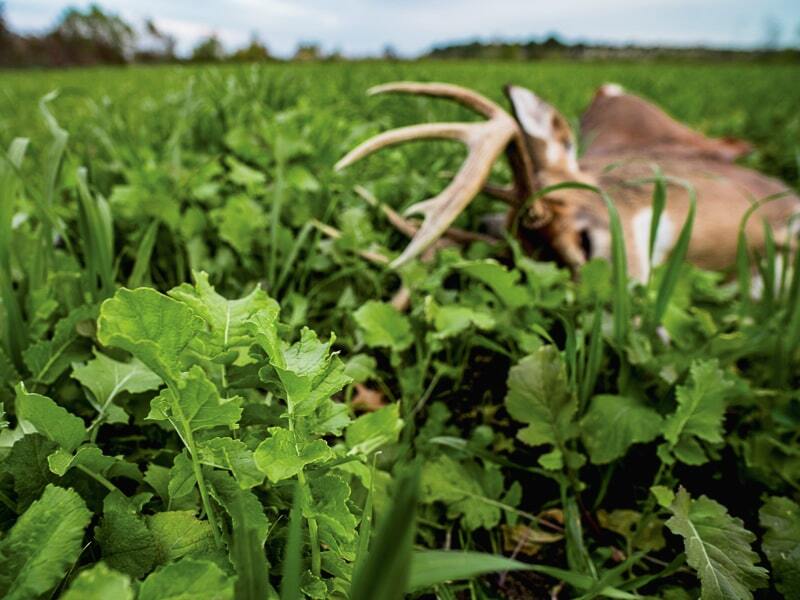
Forage Variety Seeds Designed to be Eaten
Many food plot blends are bred to produce seed yield. But that's not what deer want or need. Evolved products produce high-quality, high-volume leafy forage. Our seeds grow into food plots that don't go bare; they're eaten, then regrown to be eaten again. Even after intense browsing pressure, forage varieties continue producing premium forage all season long.
We've hand-selected these seeds to bring your food plots an extensive list of benefits including rapid establishment, high palatability, maximum nutrition and production, and the ability to perform in a wide range of locations, soils, and weather conditions.
Clovers
Clover (Perennial)
The best of proven perennial forage, clovers consistently attract deer and provide up to 35% protein. These plants are ideal because of their nutrient content, palatability, production yields and drought resistance.
Clover (Annual)
Deer often prefer annual clovers because they grow in such high volumes, and benefit from their highly digestible protein content. This forage grows rapidly, with the potential to reach more than 24 inches in height.
Brassicas
Rape
Forage rape is adaptive to an extremely wide range of soils and weather conditions and will provide abundant large-leaf forage into the winter months. After a heavy frost, the sugar content increases in the leaves and becomes highly attractive to deer. Mature forage rape can reach heights up to 24 inches tall.
T-Raptor
T-Raptor is a hybrid Brassica that can become established in just six weeks. This turnip-rape hybrid has the high leaf production found in rape with the added benefit of a turnip-like bulb that deer love to dig up. It provides a high sugar content and is well suited to endure heavy browsing pressure.
Daikon Radishes
This low tannin variety of daikon radishes was specifically chosen for its high yield and large tubular bulb. The bulbs grow up to 24 inches tall and bore into the hardpan to reduce soil compaction. This increases organic matter in the soil as the plants decompose improving overall moisture retention and soil health.
Turnips
Forage turnips are adaptive to a wide range of soil types and weather conditions, providing an abundant large-leaf and root forage into the winter months. After a heavy frost, the sugar content increases to attract deer needing calories to store body fat. Late in the season when food sources become scarce, deer will dig up the turnip bulbs for an energy boost.
Legumes
Alfalfa
Alfalfa is a proven perennial forage that produces enormous amounts of forage with a high nutritional value. Mature plants grow up to 25 inches tall, sprouting each spring. These plants like well-drained soils, but they'll also establish in heavier soils. Alfalfa is a very drought-resistant plant that produces for three or more years.
Cowpeas
Cowpeas are a drought-resistant warm season annual legume. They establish quickly and tolerate a range of soil pH levels. Cowpeas produce a high tonnage of highly palatable leaves and pods that are high in nutritional value and readily consumed by deer.
Lablab
Lablab is a fast-growing and highly palatable legume. Lablab vines climb up and over the rest of food plots, making it difficult for deer to overgraze. High levels of protein (up to 27%), calcium and phosphorous make lablab a useful tool in maximizing your herd’s body weight and antler development during the spring and summer months.
Soybeans
Soybeans are a proven warm season annual crop with exceptional palatability and high nutritional value. The forage variety can significantly out-produce co-op blends with a much higher tonnage of high-protein legume leaves for wildlife consumption. This plant is selectively bred for increased height and leaf production.
Winter Peas
Winter peas are a high-protein (up to 30%) legume capable of withstanding the cold winter months. These winter peas were specifically selected for their increased cold tolerance and low tannin content. The low tannin content increases protein digestibility and removes bitterness, making the leaves exceptionally sweet and palatable.
Grains
Oats
Forage oats are high in sugar content making them a highly attractive and palatable energy source. Sugar also provides the calories deer need to create and store body fat. This high-yielding plant is a consistent deer favorite.
Rye
Cereal rye (not ryegrass) is widely grown throughout the United States due to its ability to grow just about anywhere, even where soils are acidic or have low fertility. Cereal rye is also the most cold tolerant of the forage grains, making it ideal for northern regions as well as southern regions where late season forage production and attraction are desired.
Sorghum
Grain sorghum is a high-volume, high-quality seed that successfully attracts numerous wildlife species. The seeds have a high carbohydrate and protein (up to 22%) content that provide an excellent energy source, especially beneficial to wildlife during fall and winter months.
Tetraploid Annual Ryegrass
Tetraploid annual ryegrass produces a high sugar content forage with consistently higher tonnage than standard ryegrass. Only the best varieties have been selected to provide larger, more palatable plants that grow continuously to provide a nutritious food plot for your deer.
Triticale
This forage grain is a hybrid between forage wheat and forage rye. Triticale produces an abundance of palatable forage that's easy to digest and high in protein and carbohydrates. These plants are widely adaptable, making them perfect for planting in both northern and southern climates. Deer will consistently feed on triticale late into the growing season.
Wheat
Wheat is probably the most planted and important forage grain for wildlife in the United States. Growing well almost everywhere, wheat produces tender, nutritious foliage during fall, winter, and spring. It is more cold tolerant than oats, making it ideal for colder climates and in mixes with other grains as well as clover and chicory.
Other
Chicory
New Zealand’s standard year-round forage provider delivers high levels of minerals and more than 30% protein content. Forage chicory establishes itself during the early season and can last through spring, summer, and fall months thanks to its long taproot that stores nutrients and moisture for long dry periods. Average mature plant height is about 15 inches.
Small Burnet
Small burnet is a drought-tolerant perennial plant high in protein, minerals, amino acids, and fatty acids. A deep tap root helps this plant survive through dry periods or in sandy soils, but it doesn't do well in wet areas with poor drainage. It is adaptable to most soil types and a wide range of soil pH levels.
Sunflower
Wildlife love sunflowers both for the seeds and the forage they produce. This variety creates up to three tons of seeds per acre, highly palatable and rich in oils with Omega fatty acids. Sunflowers also provide a vertical platform for vine-type forage legumes, increasing sunlight availability and yield potential as a result.